African countries have the potential to generate an extra $469.4 billion in tax revenue every year between 2025 and 2029 by embracing digital tools, stronger enforcement mechanisms, and simplified tax systems, the African Development Bank (AfDB) has said.
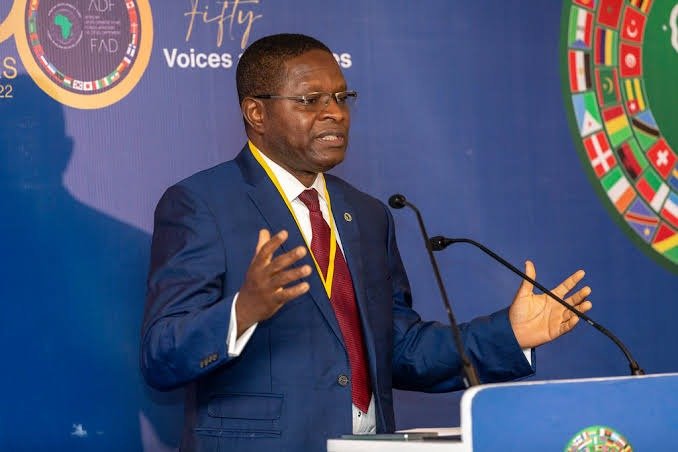
The revelation was made by Prof. Kevin Urama, Chief Economist and Vice President for Economic Governance and Knowledge Management at the AfDB, while addressing finance ministers at the 58th Conference of African Ministers of Finance, Planning and Economic Development (COM58) held in Tangier, Morocco.
Prof. Urama noted that Africa’s current average tax-to-GDP ratio stands at just 18.4 per cent, significantly below the 27 per cent minimum threshold required to adequately fund critical development needs. He attributed the wide gap to a large informal sector, weak enforcement, fragmented data systems, and widespread tax evasion.
Beyond revenue shortfalls, the AfDB Chief Economist highlighted that African governments are losing over $587 billion annually to illicit financial flows, corruption, and wasteful public spending — leakages he described as largely preventable through stronger governance and accountability measures.
ALSO READ: PENTERA APPOINTS HAGIT YNON AS CHIEF FINANCIAL OFFICER
The challenge is particularly pronounced in Nigeria, where the tax-to-GDP ratio has remained stubbornly low at around 6 to 8 per cent in recent years. While the Federal Government has prioritised tax reforms as a cornerstone of its economic agenda, Prof. Urama’s remarks underscored the significant work still required to bridge the gap.
He urged African ministers to accelerate the deployment of digital payment platforms, unique taxpayer identification systems, and artificial intelligence to identify compliance gaps and improve collection efficiency. Other recommendations include phasing out ineffective tax exemptions, tightening controls on transfer pricing, and curbing capital flight.
Prof. Urama disclosed that the AfDB is currently supporting domestic resource mobilisation efforts through 31 active programmes across 22 member countries, offering a combination of financing, technical assistance, and policy advisory support to governments.
The Bank also announced the launch of a new Public Service Delivery Index for Africa, a standardised tool designed to measure how effectively governments convert tax revenue into tangible public services,an initiative aimed at rebuilding citizen trust in state institutions.
The AfDB’s strong call to action at COM58 reinforces the urgent need for African governments to treat domestic revenue mobilisation as a strategic priority for achieving sustainable development and reducing reliance on external borrowing.