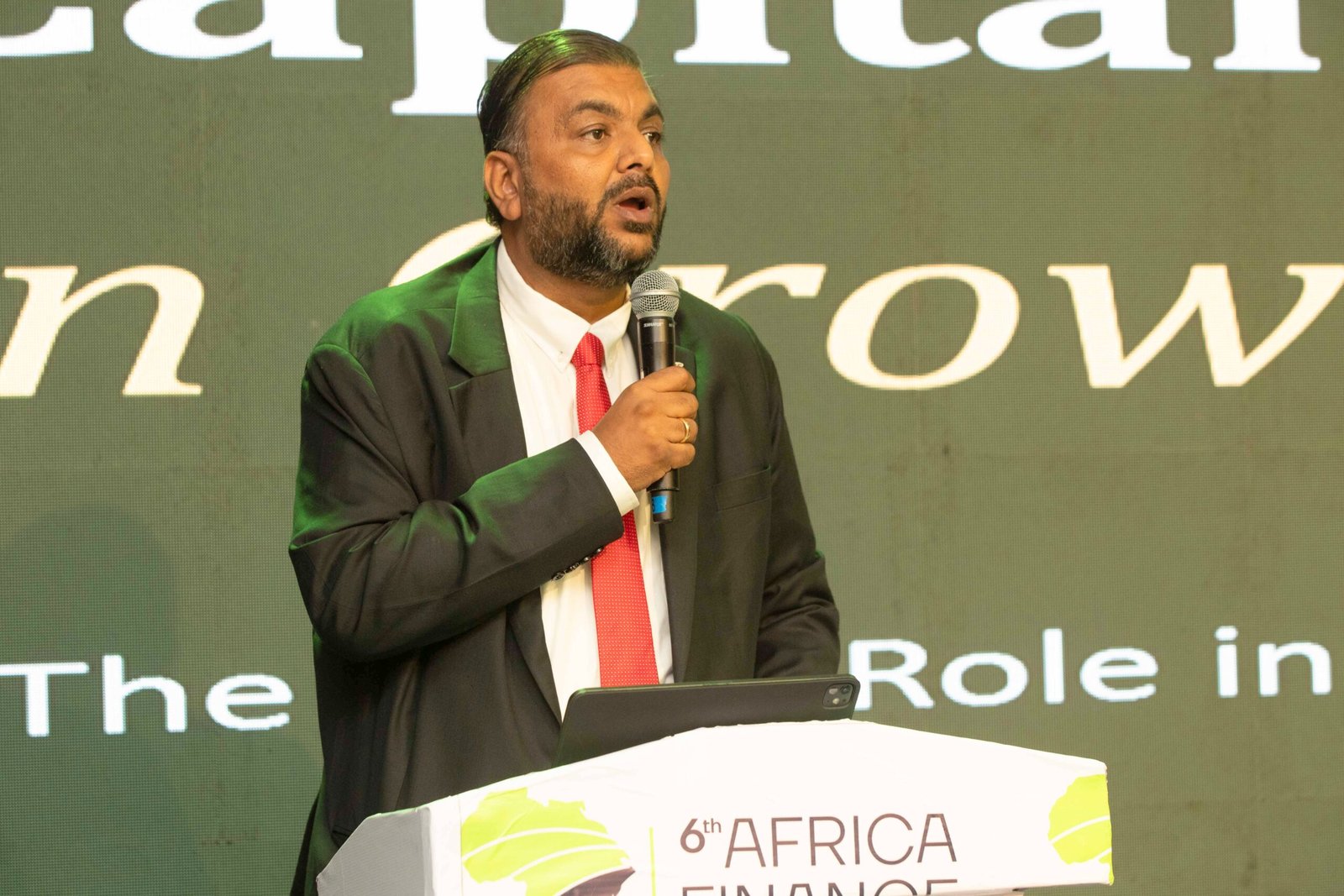
Speaking during a high-level session themed “Capital Discipline in Growth Markets: The CFO’s Role in Funding Strategy,” Khemka argued that while Africa’s economic growth potential remains enormous, the continent continues to struggle with inefficient capital allocation, weak funding structures, governance gaps, and rising financing costs that threaten long-term enterprise value.
Addressing finance executives, policymakers, investors, and corporate leaders at the conference, Khemka described capital discipline as one of the most critical competitive advantages modern African organizations must develop in an increasingly volatile economic environment.
“Growth is abundant. Disciplined capital is not,” he stated while outlining the realities facing African businesses in 2026.
According to figures presented during the session, Africa’s GDP is projected to reach approximately $5.4 trillion by 2030, yet nearly 60 percent of SMEs across the continent still identify access to capital as their biggest growth barrier. He also highlighted that the cost of capital for African businesses remains nearly three times higher than that of developed markets, while over 40 percent of CFOs report concerns around funding misallocation risks.
Khemka warned that undisciplined financing strategies continue to destroy enterprise value across many African institutions. He identified major structural weaknesses including misallocated capital, currency and tenor mismatches, weak governance systems, and the systematic underpricing of risk.
He explained that one of the most common mistakes among African businesses is using short-term foreign-denominated debt to finance long-term assets, creating dangerous refinancing exposure and foreign exchange vulnerabilities.
“Capital discipline is the deliberate, systematic allocation of financial resources to initiatives that generate returns exceeding the cost of that capital,” he said. “At the same time, organizations must actively avoid deploying resources into initiatives that fail to create sustainable value.”
ALSO READ: 6TH AFRICA FINANCE FESTIVAL UNITES FINANCE LEADERS IN LAGOS
Throughout the session, Khemka emphasized that the role of the modern CFO has fundamentally evolved from traditional scorekeeping and compliance management into enterprise-wide strategic leadership.
Comparing the finance function of the past to today’s realities, he noted that yesterday’s CFO focused primarily on retrospective reporting, budgeting, and risk avoidance, while today’s finance leader must become a forward-looking architect of value creation, portfolio allocation, and intelligent risk management across multiple markets.
“The African CFO must be proactive, not reactive, on funding strategy,” he stressed.
To address these challenges, Khemka introduced what he described as an “Africa Funding Strategy Framework,” built around four pillars: governance and mandate, capital structure design, portfolio allocation, and execution monitoring.
He noted that successful organizations must institutionalize board-level capital policies, implement stronger investment committees, adopt disciplined internal rate of return (IRR) frameworks, and embrace real-time monitoring systems capable of dynamically reallocating resources away from underperforming investments.
Khemka also highlighted several practical financial tools increasingly relevant to African markets, including blended finance structures, local capital market access, rolling capital reviews, scenario-based budgeting, and disciplined currency hedging strategies.
He cautioned African companies against blindly applying global weighted average cost of capital (WACC) assumptions to frontier markets without adjusting for country risk premiums, liquidity challenges, inflation volatility, and foreign exchange exposure.
“African businesses face WACC levels that are two to three times higher than their global peers,” he said. “Every percentage point matters because every percentage point directly impacts growth.”
Drawing from case studies across West, East, and Southern Africa, Khemka demonstrated how disciplined funding strategies have enabled organizations to reduce financing costs, improve returns on invested capital, and unlock long-term institutional investment.
One example highlighted a Nigerian fintech company that reduced FX exposure by 68 percent and lowered its WACC from 24 percent to 16.5 percent after restructuring its capital mix toward local currency financing and blended development finance facilities.
Another case from Kenya demonstrated how an infrastructure company eliminated refinancing risks by issuing long-term green bonds aligned with the lifespan of its assets, ultimately unlocking over $340 million in institutional capital.
Khemka further emphasized the growing importance of ESG-linked financing instruments, noting that sustainability-linked and green financing structures are becoming critical sources of cheaper and longer-tenor capital for African businesses seeking international investors.
As the session concluded, he urged finance leaders across the continent to move beyond annual budgeting cycles and adopt more agile capital allocation systems capable of responding quickly to rapidly changing market conditions.
“The CFO who masters capital discipline does not just protect the balance sheet,” Khemka declared. “They fund Africa’s future.”